


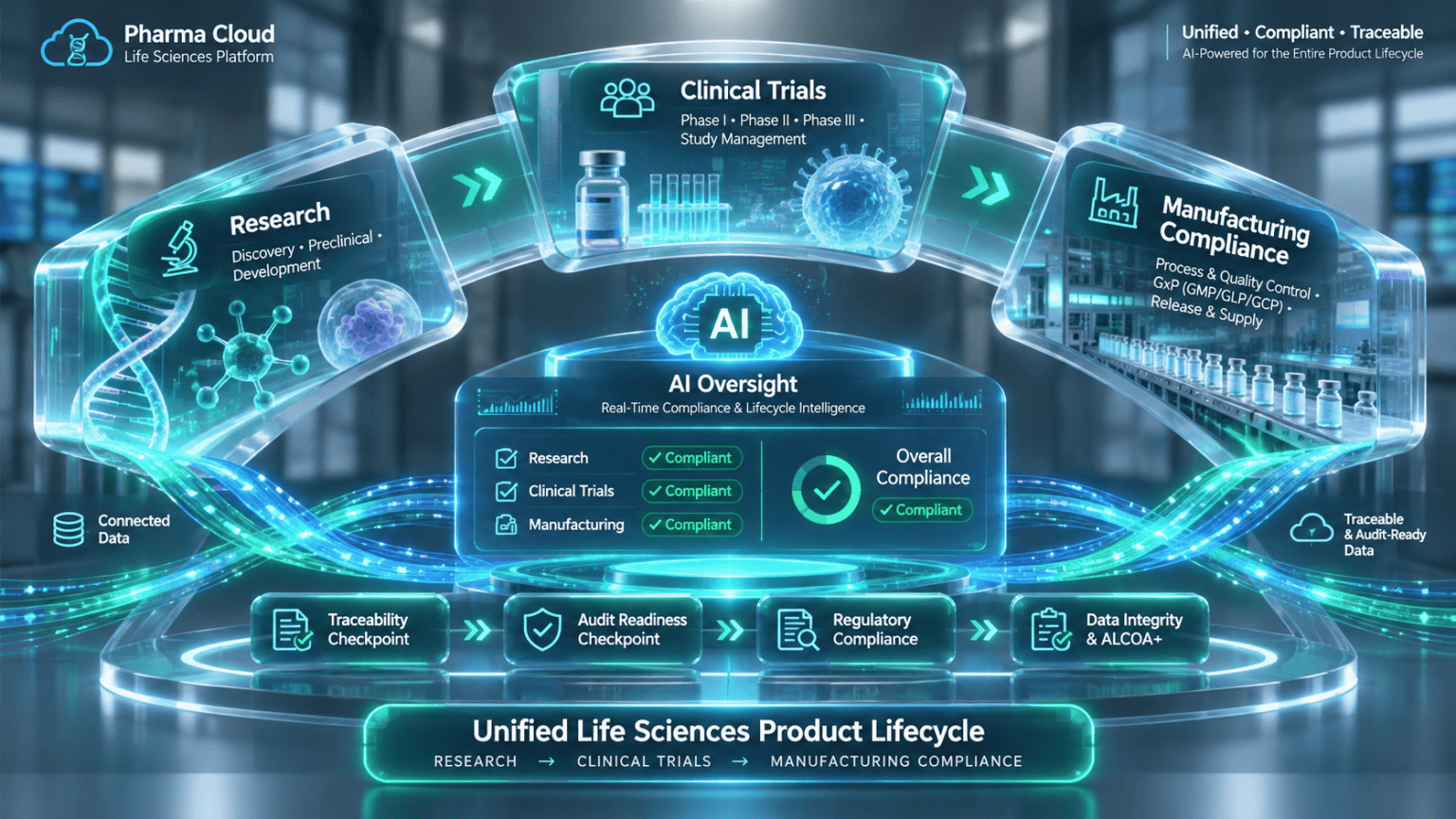

The pharmaceutical industry is entering a new phase of digital transformation where artificial intelligence is no longer experimental. It is becoming a core capability within critical operational systems, including validation platforms.
For many years, validation software focused primarily on documentation management and compliance traceability. While these capabilities remain essential, the expectations placed on validation technology are evolving. In 2026, organizations are increasingly looking for platforms that actively improve validation performance rather than simply support it.
Explore modern validation platforms:
→ Validfor Digital Validation Platform
→ Kneat Validation Platform
AI is shifting validation from execution to optimization
Traditional validation systems were designed to digitize processes that were originally created for paper-based environments. This approach improved efficiency but often preserved legacy complexity.
AI-driven platforms represent a fundamental shift. Instead of replicating existing workflows, they focus on optimizing how validation work is performed. This includes intelligent assistance in protocol creation, automated analysis of deviations, and predictive insights that help teams prioritize high-risk areas.
As validation teams face increasing pressure to deliver faster results with fewer resources, this shift toward optimization is becoming a critical differentiator.
The role of intelligent automation in compliance
One of the most significant advantages of AI-enabled validation platforms is their ability to automate repetitive tasks. Documentation generation, test case structuring, and data review processes can be streamlined, reducing manual workload and minimizing human error.
This level of automation supports a more proactive compliance model, where validation teams can focus on risk assessment and strategic oversight rather than administrative execution.
CSA adoption is accelerating AI integration
Regulatory guidance encouraging Computer Software Assurance is also influencing the adoption of AI-driven validation tools. By enabling targeted validation strategies and reducing unnecessary documentation, these platforms align closely with risk-based regulatory expectations.
Organizations adopting CSA methodologies are increasingly prioritizing validation software that supports intelligent decision-making rather than static workflow execution.
User experience is becoming a competitive factor
AI-driven validation platforms are often accompanied by modern interface design and improved usability. This is not coincidental. As validation processes become more dynamic, user experience plays a central role in ensuring effective adoption.
Platforms that combine intelligent automation with intuitive workflows enable teams to maintain productivity while adapting to new validation methodologies.
The strategic impact of AI-driven validation
The adoption of AI within validation systems is not just a technological upgrade. It represents a shift in how organizations approach compliance and operational performance.
Validation is increasingly viewed as a strategic function that can influence time-to-market, innovation capacity, and overall product quality. Platforms that support intelligent workflows are therefore becoming integral to digital transformation initiatives in life sciences.
Explore validation-first vs ecosystem approaches:
→ Explore Validfor
→ Explore Veeva Validation Management
Final thoughts
The future of validation in pharma is being shaped by intelligence, automation, and adaptability. AI-driven platforms are redefining expectations, enabling validation teams to move beyond compliance maintenance toward performance optimization.
As regulatory frameworks and operational pressures continue to evolve, organizations that adopt intelligent validation technologies will be better positioned to navigate complexity and accelerate innovation.
In recent years, validation processes across the pharmaceutical industry have been undergoing a major transformation. Workflows that were traditionally managed through paper documentation, spreadsheets and manual review cycles are increasingly moving toward digital validation platforms. As a result, life sciences organizations often evaluate solutions such as Kneat, Validfor, ValGenesis, MasterControl and Veeva when modernizing validation lifecycle management and compliance documentation.


